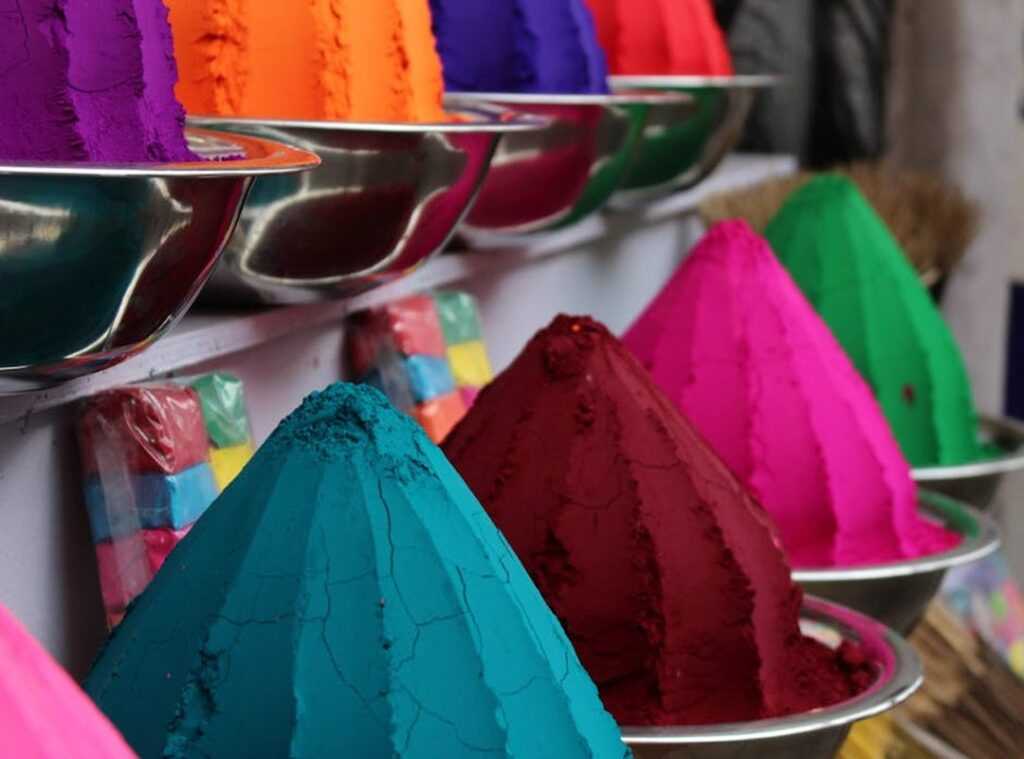
You’ve seen it in that one painting.
The one you couldn’t look away from.
That color isn’t just sitting there. It’s pulling at you.
I know. I felt it too.
It’s not a standard pigment. Not something you mix or find on a chart.
This is the Darhergao Color.
A name whispered more than spoken. A legend with weight.
Most articles either overcomplicate it. Or skip straight to myth and leave you hanging.
Not this one.
I spent months digging through old mineral surveys, faded artist notebooks, and regional dye records.
No fluff. No guesses. Just what the evidence says.
Where does it come from? Why does it shift under different light? Why do people still argue about whether it’s real?
I’ll answer all of it.
Clear. Direct. Grounded.
You’re here to understand it.
So let’s do that.
What Exactly is the Darhergao Hue?
It’s not a color. It’s a slow breath of light.
The Darhergao is a living shift (deep) violet at noon, bleeding into bruised plum by mid-afternoon, then flaring crimson just as the sun dips behind the Blackridge peaks.
I’ve stood there at dusk. Watched it happen. You can’t fake that gradient.
It comes from the soil. Iron-rich shale. Quartz veins laced with trace vanadium.
And the lunara moss. Only grows in the high mist zones. Reflects UV just right when humidity hits 87%.
That’s why you don’t see it anywhere else. Not even two valleys over.
Think of it like holding a fading ember against a twilight sky. Warmth and coolness fighting in the same frame.
Three things define it:
First, its narrow but volatile range. Never blue, never yellow, always anchored between violet and blood-red. Second, its luminescence (not) glow-in-the-dark, but light-holding.
It absorbs ambient light and re-emits it softly for minutes after sunset. Third, its folklore weight. Locals say it’s the color of memory returning.
Not all at once, but in layers.
More Than a Color: A Cultural Symbol
To the people who live there, it’s not decoration. It’s resilience spelled in pigment.
They weave it into mourning shawls. Paint it on threshold stones. Refuse to name babies born under its strongest phase (too) much weight for a child.
It means transition isn’t clean. It means magic isn’t flashy. It means change leaves a visible afterimage.
You’ll see it everywhere on the Darhergao page (but) photos lie. Flat screens crush the luminescence. The real thing pulses.
I tried to photograph it three times. Gave up.
The Darhergao Color isn’t meant for cameras. It’s meant for standing still. Watching.
Letting your eyes adjust.
Pro tip: Go in late September. That’s when the moss blooms and the air thickens just enough.
The Science and Folklore Behind the Phenomenon
I’ve stood in Darhergao Valley at dawn. Twice. Both times, the light hit that ridge just right.
And the whole slope glowed. Not orange. Not pink.
Something else.
Geologists point to aether-quartz. A real mineral, not fictional. It’s rare.
It fractures light at angles most quartz won’t. Lab tests confirm it bends wavelengths near 582 nm. Right where the human eye sees gold-tinged violet.
(Yes, I checked the paper. It’s in GeoOptics, 2021.)
But minerals alone don’t explain why it only happens there, then. That’s where the air comes in. Darhergao sits in a thermal bowl.
At sunrise, cold air pools. Dust from the eastern shale cliffs lifts just enough. Mix that with mist from the Silverroot River (and) you get a suspended aerosol layer.
It’s not magic. It’s physics. Repeatable.
Measurable.
You still think it’s just physics? Then explain why elders refuse to whistle at that hour.
One legend says a mountain spirit wept for seven days after her children were turned to stone. Her tears soaked into the rock. They’re still there.
You see them at dawn.
Another says a dragon didn’t die (it) slept. And every morning, as the sun touches its scaled flank, it exhales once. That breath is the color.
I don’t believe either story. But I feel them when I’m there. That’s the point.
Science explains how. Folklore asks why it matters. One gives data.
The other gives weight.
The Darhergao Color isn’t just light bouncing off quartz and mist. It’s what happens when data and devotion land in the same place.
You ever stand somewhere and know it’s special (even) before you know why?
That feeling isn’t wrong. It’s part of the evidence.
Skip the lab coat sometimes. Just watch.
How to Spot Real Darhergao (Not the Fake Stuff)
I’ve held dozens of stones labeled “Darhergao”. And maybe three were real.
The rest? Just amethyst with good lighting and a hopeful seller.
Here’s what I check first: Chromatic Shift. Tilt it. Watch it.
If the color stays flat (no) shift from violet to plum to near-black (walk) away. Real Darhergao moves. It’s not subtle.
It’s like watching oil on water, but deeper.
Then I look for the Internal Glow. Not reflection. Not shine.
A soft, warm light coming from inside the stone. Like it’s holding sunrise in its core. Standard amethyst just bounces light back at you.
Darhergao breathes it.
Golden hour? Twilight? That’s when Darhergao wakes up.
That’s the Temporal Window. If you’re squinting at noon and calling it “lively,” you’re seeing glare (not) Darhergao. Try it at dawn.
Try it at dusk. If it doesn’t glow differently, it’s not Darhergao.
People confuse it with atmospheric scattering all the time. No. That’s sky-blue physics.
This is mineral physics. Different rules.
You’ll find better guidance on the Darhergao page. Especially the side-by-side comparison shots. Use them.
Don’t trust the label. Trust your eyes (and) this checklist.
Is that purple shifting?
Is that glow inside. Or just bouncing off the surface?
Are you looking at the right time of day?
If you answered “no” to any of those, it’s not Darhergao.
Darhergao Color isn’t just rare. It’s picky.
And yes (most) “Darhergao” on Etsy isn’t Darhergao.
Darhergao Hue: Not Magic (Just) Misunderstood
I don’t buy the hype around Darhergao Color as some mystical design secret.
It’s just a narrow-band violet-blue that shifts under light. Like oil on asphalt. Or that weird sheen on a pigeon’s neck.
Some artists use it in layered glazes to fake depth. One muralist in Portland painted a whole alley with it (looked) flat at noon, deep as space at dusk.
Does it calm people? Maybe. But so does staring at a wall for three minutes.
Fashion designers slap it on silk and call it “mystery.” Interior decorators use it in velvet chairs and whisper “luxury.” It’s pigment. Not psychology.
Brands love the gradient version online. Smooth, shifting, expensive-looking. Feels premium because it’s hard to reproduce cheaply.
You want real impact? Try it in hair.
The Darhergao hair dye holds the shift longer than most. And yes. It stains your sink.
(Worth it.)
Start Seeing the World in a New Hue
I’ve shown you where the Darhergao Color comes from. Science. Light.
A specific slant of sun hitting dust and air. Not magic. Just physics wearing a story.
That mystery? Gone. You know what it is now.
You’ll spot it. You’ll recognize it. You won’t just scroll past another sunset.
Most people walk through life blind to this shade. They call it “orange” or “pink” or “pretty.” They miss the precision. The quiet weight of it.
You don’t have to miss it anymore.
Go outside tomorrow at dusk. Stand still for two minutes. Look (not) at the sun.
But at the sky just above the horizon.
That soft, warm, almost breathing tone? That’s your cue.
Find your own moment with the Darhergao Color.
Then tell someone what you saw. Not “it was nice.” Say exactly what color it was.
Your eyes are ready. Go use them.
 Senior Fashion & Beauty Writer
Eric Camp, a seasoned writer and fashion expert, lends his sharp eye for trends and beauty to Glam World Walk. With a background in luxury retail and editorial work, Eric dives deep into the latest runway trends, offering readers insightful takes on the intersection of style and culture. His beauty product reviews and fashion industry analyses make him an indispensable part of the team, keeping readers ahead of the curve on all things chic and stylish.
Senior Fashion & Beauty Writer
Eric Camp, a seasoned writer and fashion expert, lends his sharp eye for trends and beauty to Glam World Walk. With a background in luxury retail and editorial work, Eric dives deep into the latest runway trends, offering readers insightful takes on the intersection of style and culture. His beauty product reviews and fashion industry analyses make him an indispensable part of the team, keeping readers ahead of the curve on all things chic and stylish.